

Beyond the Tipping Point
Finding peace and purpose when collapse feels inevitable

A main road along the nearby coast collapsed into the sea during a storm a couple of weeks ago. It may be too expensive to replace it. A row has erupted over how to pay for shoring up the main railway, which also scenically curls around the cliffs, but is vulnerable to landslides and to waves undermining the railway track. Mentions of how climate chaos is contributing and how much worse it could get are muted.
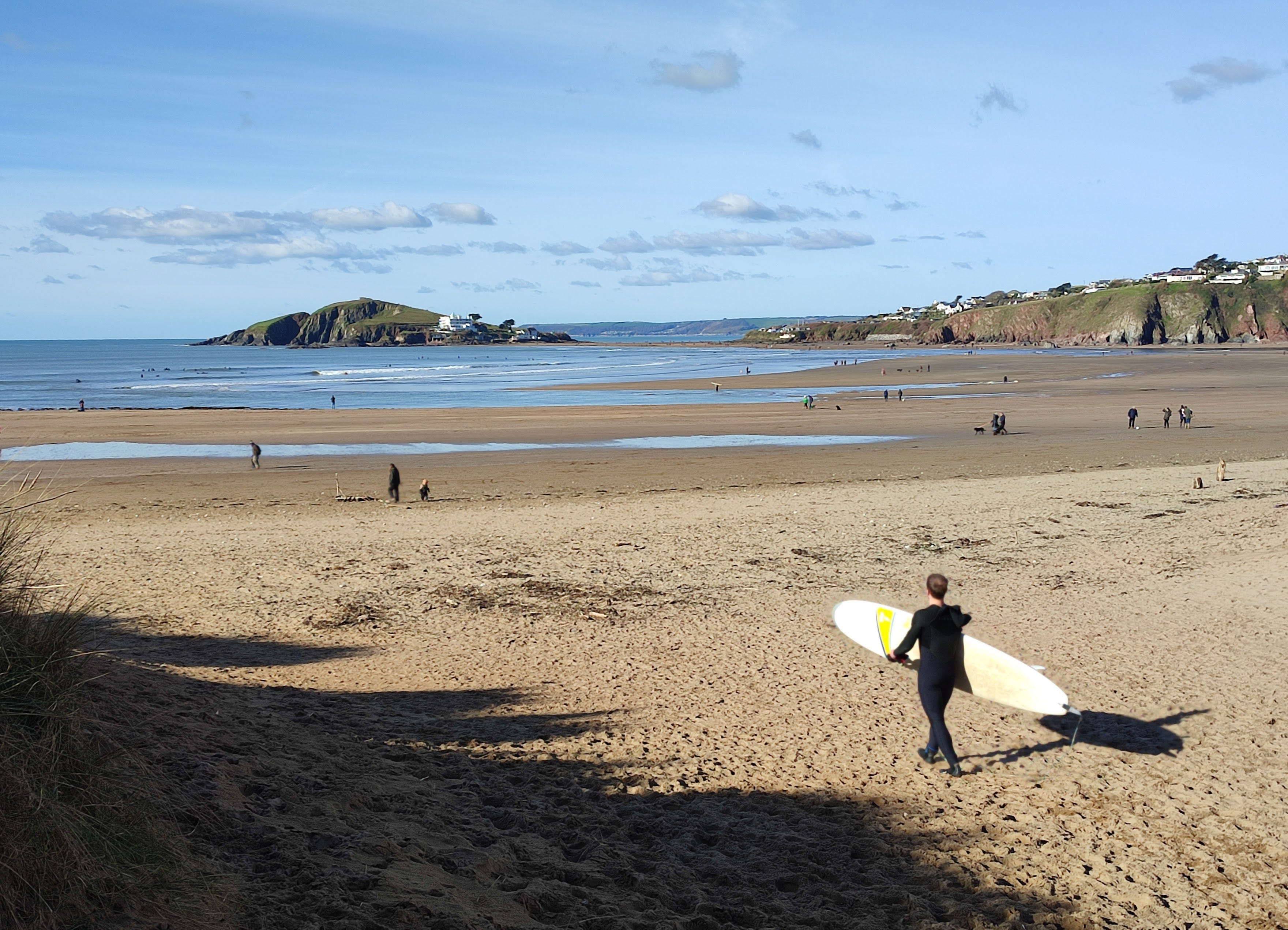
The sun shone on Saturday for the first time since Christmas. I joined the dogs, surfers and walkers at one of our gorgeous Devon beaches. It was a respite for us all from the relentless rain and that nagging feeling that everything is going to hell in a handcart faster and faster.
When Jem Bendell published what became a viral paper in 2018 predicting social collapse from ecological emergencies, I felt some relief that here was someone looking at the research and articulating what many of us had been sensing for a while. You might quibble with some of the evidence Jem drew upon or criticise the ‘doomer’ mindset, fearing it might lead to apathy, despair and inaction.
But it is impossible to dismiss the core of Jem Bendell’s message. It is too late to reverse climate change. We have lost too many forests, too much ice, and the sea is warming too quickly. The best we can do is ‘slow the glide’ and adapt to what now looks inevitable.
But what does that mean? When we delve into the self-reinforcing consequences of ecosystem loss and extreme weather, the damage to our life-support systems looks unstoppable. Climate scientists refer to ‘tipping points’, the moment at which, like tipping a chair too far back, it is too late to stop the inevitable crash.
Predicting when those will occur or what the consequences will be is an inexact science, but with the Earth now heating up faster than the models predicted, the concern is that we could see those tipping points in our lifetimes.
The UK government has, finally, under some pressure, published a Security Council report on the impact of global biodiversity loss and ecosystem collapse, which highlights significant risks of global, national and food insecurity. The government delayed the report’s release to tone it down and make it less alarming.
The truth may not be what we want to hear, but if your loved one had cancer that might prove terminal, would you want to know so that you could make every effort to get them the best treatment? Whether successful or not, you would want them to have the best possible life in the meantime. We would be a bit insulted if we were eventually told, ‘We didn’t want to upset you.’ We are all a great deal more resilient than we think, and the government, apparently, gives us credit for.
In his paper, Jem Bendell identifies that we do not simply need to make practical adaptations such as improving flood defences or growing more food locally. We also need to look at the psychological and spiritual implications of what the future could be, which he calls deep adaptation. This involves changing our values and beliefs to relinquish acquisitive tendencies, restore some old ways, and reconcile with the predicaments ahead.
But rather than trying to consciously change what seems to matter to us, or how we try to feel better or more in control, maybe it is a matter of seeing how we fit into life a bit differently.
We have been conditioned by our Western culture to believe that our peace of mind depends on external success, be that a good career, a happy relationship, or enough exotic holidays. Economic and social systems have built up around these beliefs, which lead us to consume, with all the extraction and exploitation that come with it.
Yet even when worries about the future overwhelm me, I feel a connection to the life force that has healed the Earth and restored life several times throughout geological history. There have been tumultuous changes and many losses. But I sense life has the intelligence and tenacity to keep going, keep adapting and keep evolving. And we are a part of that. We may feel we are victims just being buffeted around, but we do have something crucial to contribute, a job to do, maybe big, it might look tiny, with ramifications we may never see.
The fundamental problem that underpins all the planet’s crises is losing sight of the fact that we are one of the ways the life force shows up. We are not separate from anything or anyone, the homeless guy on the corner, the rain on my skylights, the primroses coming out in my garden. Like it or not, we are being moved by something much bigger than the ideas we dream up in our heads, the perspectives we might have or the uncomfortable feelings that often plague us.
That might feel fatalistic, but I find it liberating to realise that all I have to do is notice when I feel settled down and spacious. If I pay less attention to how I think or feel when I’m not, I can pay a bit more attention to the nudges that come with a sense of clarity, even if they may be a bit out there, with no obvious outcome.
It can feel like cheating not to make myself miserable overthinking what I can possibly do to make a significant difference. I have some useful gifts and experience; we all do by virtue of having been alive this long. It is enough. We can trust the wisdom of the universe to whisper how we can make use of them. We just need to listen.
Whether ecological or societal collapse will occur, I have no idea. But it looks at least plausible, and many people, places, and life forms will probably suffer. Grounded in the realisation of who we truly are, we can face up to it, not to spread doom or apathy, but act from realism and clarity. All I can do, all you can do, is take the next step that presents itself from that place of connection and peace. Courage, even joy, then becomes part of how we function.
A friend sent me a quote today (when I was already two-thirds of the way through writing this) from Radhika Das, the kirtan performer and bhakti yoga teacher:
‘When the inner world becomes clearer, care for the Earth becomes natural…not forced or guilt-driven, but devotional. Because the planet does not need us to panic. It needs us to wake up’
Jem Bendell’s paper: deepadaptation.pdf
UK Government report: National security assessment - global biodiversity loss ecosystem collapse and national security